
Isaiah Day 6: Here Am I. Send Me.
Verses Used
Isaiah 6 (NLT)
John 12:37–41 (NLT)
Romans 12:1–2 (NLT)
Revelation 4:8–11 (NLT)
Key Verse
Isaiah 6:8 (NLT)
"Then I heard the Lord asking, 'Whom should I send as a messenger to this people? Who will go for us?' I said, 'Here I am. Send me.'"
Chapter Overview
Everything changes in Isaiah 6.
Up until now, Isaiah has been delivering God's message to the people. But now we're invited behind the scenes to witness the moment that shaped his life forever.
The chapter begins during a time of uncertainty. King Uzziah had died after a long reign, leaving Judah wondering what the future would hold. Earthly leadership had changed.
But when Isaiah looked toward heaven, he discovered something that had never changed.
God was still on the throne.
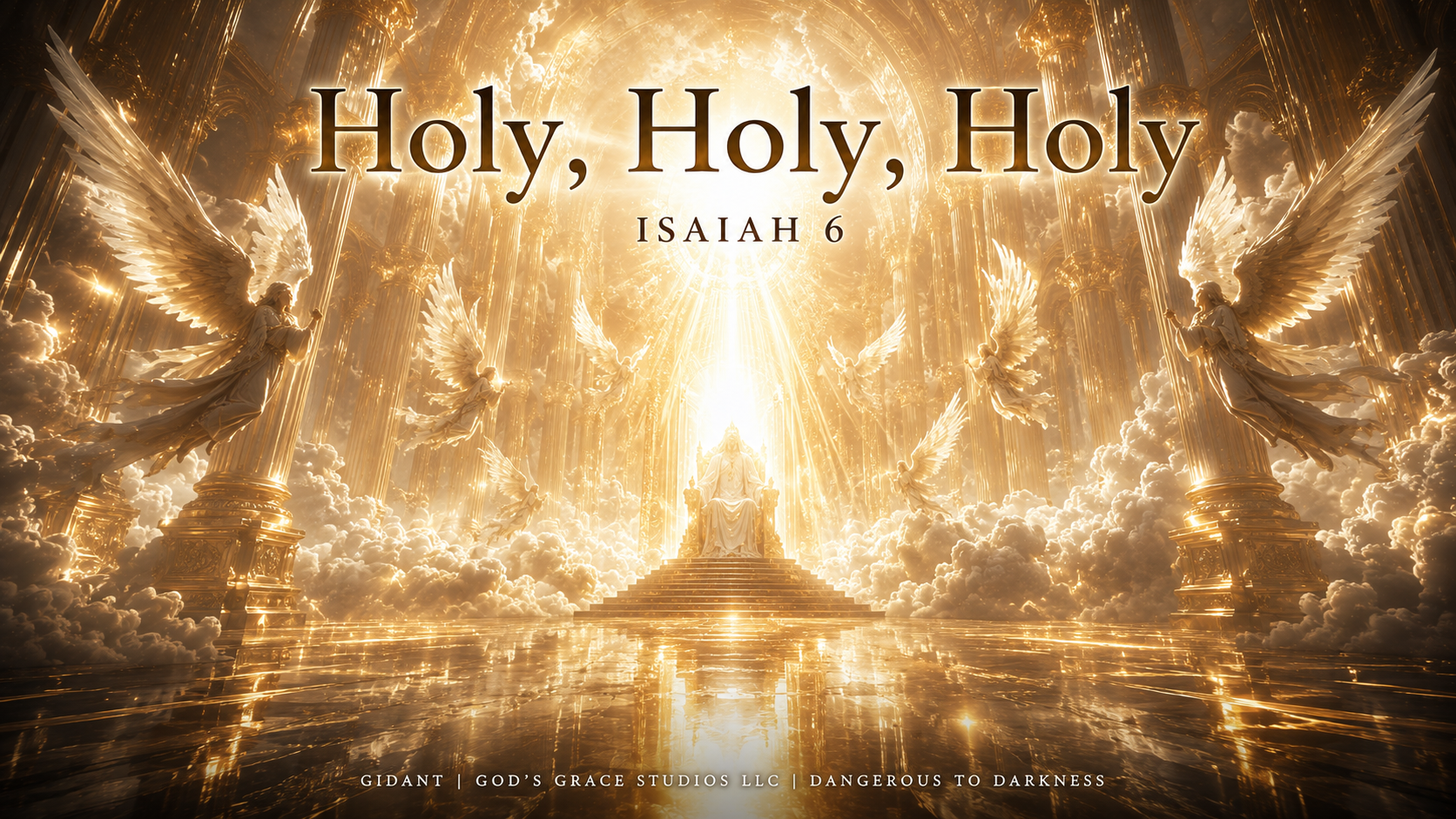
Isaiah saw the Lord high and exalted, seated on a throne that filled the heavenly temple with glory. Mighty seraphim surrounded Him, continually declaring,
"Holy, holy, holy is the LORD of Heaven's Armies! The whole earth is filled with his glory!"
At that moment, Isaiah wasn't overwhelmed by God's power as much as he was overwhelmed by God's holiness.
Seeing the holiness of God caused Isaiah to see himself clearly.
Instead of comparing himself to other people, Isaiah suddenly recognized his own sinfulness.
"Woe is me!"
He confessed.
"I am ruined!"
He realized he was a sinner standing before a perfectly holy God.
But something remarkable happened.
God didn't leave Isaiah in his guilt.
One of the seraphim took a burning coal from the altar and touched Isaiah's lips, declaring that his guilt had been removed and his sins forgiven.
Only after Isaiah had been cleansed did God ask,
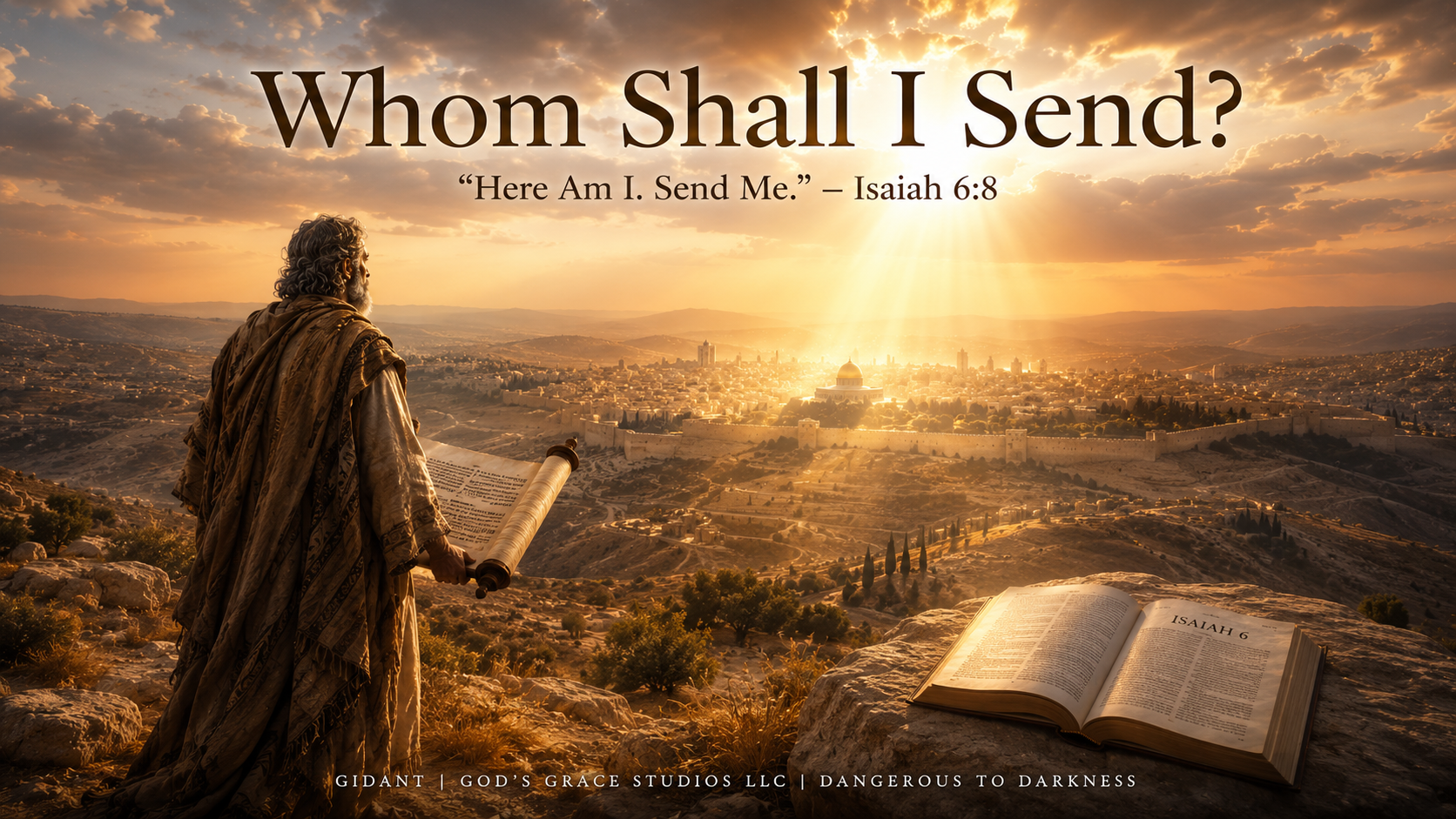
"Whom shall I send?"
Isaiah's famous response wasn't an emotional reaction.
It was the grateful response of someone whose life had just been transformed by God's grace.
"Here I am.
Send me."
What It Meant Then
Isaiah tells us this vision happened "in the year King Uzziah died."
That detail is important.
King Uzziah had ruled Judah for more than fifty years. Although he began as a faithful king, pride eventually led to his downfall. His death marked the end of an era, and many people likely wondered what would happen next.
Political uncertainty filled the nation.
But before God spoke about Judah...
Before God called Isaiah...
Before anything else happened...
God revealed who He is.
Isaiah didn't first receive a mission.
He first received a vision.
He saw the Lord seated on the throne.
Not an empty throne.
Not a throne occupied by another king.
The throne belonged to God.
That truth would have given hope to everyone living through uncertain times.
Earthly rulers come and go.
God remains King forever.
Isaiah also learned something every believer eventually discovers.
The closer we come to God's holiness, the more aware we become of our need for His grace.
Before this moment, Isaiah had boldly confronted the sins of others throughout the first five chapters.
Now, standing before God's holiness, he didn't point at anyone else.
He confessed his own need.
That's the proper response to encountering the living God.
Yet God's purpose wasn't to shame Isaiah.
It was to prepare him.
Before God entrusted Isaiah with speaking to others...
God first cleansed Isaiah's own heart.
Grace always comes before service.
Forgiveness always comes before ministry.
God wasn't looking for a perfect messenger.
God was preparing a forgiven one.
What It Means Today
Isaiah 6 reminds us that the greatest need in our lives isn't a change in circumstances.
It's a fresh view of God.
Like Isaiah, we often become consumed with what's happening around us. We worry about the future, stress over our responsibilities, and become distracted by the problems we face. It's easy to focus on the uncertainty of the world while forgetting the certainty of who God is.
Isaiah's world had just been shaken.
A king had died.
The future looked uncertain.
Yet when God opened Isaiah's eyes, the first thing he saw wasn't chaos.
He saw the Lord on the throne.
That same truth brings peace today.
Elections come and go.
Economies rise and fall.
Cultures change.
Life can change in an instant.
But none of those things change who God is.
God is still holy.
God is still faithful.
God is still sovereign.
God is still worthy of our trust.
This chapter also teaches us something important about ourselves.
The closer we grow to God, the more humble we become.
Isaiah didn't walk into God's presence thinking he had everything together.
He immediately recognized his own need for grace.
That's one of the marks of genuine spiritual maturity.
The more we understand God's holiness, the less interested we become in comparing ourselves to other people.
Instead, we become grateful that God has shown mercy to us.
Finally, Isaiah reminds us that God doesn't call perfect people.
God calls forgiven people.
Many believers hesitate to serve because they feel unqualified. They think they don't know enough, haven't been Christians long enough, or have made too many mistakes.
Isaiah would understand those feelings.
Before God ever sent him, Isaiah confessed that he was a sinner.
God's answer wasn't to find someone else.
God cleansed him.
The same is true for us.
God isn't looking for flawless people.
God is looking for hearts that are willing to say,
"Here I am."
See Jesus Here
Isaiah's cleansing points directly to Jesus Christ.
The burning coal from the altar symbolized atonement.
The altar was the place where sacrifices were offered for sin.
When the coal touched Isaiah's lips, his guilt was removed—not because the coal had power, but because God provided a way for forgiveness.
That moment foreshadows the cross.
Jesus became the final and perfect sacrifice for our sins.
Unlike the temporary sacrifices of the Old Testament, Christ's sacrifice was once and for all.
Through His death and resurrection, our guilt is removed, our sins are forgiven, and we are welcomed into God's presence.
Isaiah also saw the Lord seated on the throne.
In John's Gospel, we're told that Isaiah saw Jesus' glory when he witnessed this vision (John 12:37–41).
That means the One Isaiah worshiped in the temple is the same Jesus we worship today.
The holy King on the throne became the Savior on the cross.
What an incredible picture of God's redeeming plan.
Character of God
God Is Holy
More than any other chapter in Isaiah, this one reveals the holiness of God.
The seraphim don't cry,
"Love, love, love."
Or,
"Power, power, power."
They proclaim,
"Holy, holy, holy."
In Hebrew, repeating something three times emphasizes its absolute perfection.
God isn't merely holy.
God is perfectly holy.
Completely pure.
Completely righteous.
Completely set apart from sin.
At first, God's holiness can feel overwhelming because it exposes our own imperfections.
But it's also deeply comforting.
Because God is holy, we know every promise He makes is trustworthy.
Every act of justice is perfect.
Every expression of love is pure.
God will never fail because God's character never changes.
His holiness isn't something to fear if we've trusted in Christ.
It's something that draws us into awe and worship.
The Lie vs. The Truth
The Lie
"God could never use someone like me."
Many people believe their failures have permanently disqualified them from serving God.
They focus on their weaknesses instead of God's grace.
That's exactly where the enemy wants us to stay.
The Truth
God often uses people who know they need His grace.
Isaiah didn't become useful because he was perfect.
He became useful because he humbled himself before God and received God's cleansing.
God's grace doesn't just forgive us.
It prepares us for the work God has planned for us.
Did You Notice?
God didn't ask,
"Who is qualified?"
Or,
"Who has the most experience?"
God simply asked,
"Whom shall I send?"
Isaiah wasn't the only person in heaven that day.
The seraphim were there.
The throne room was full of heavenly beings.
Yet God chose to send a forgiven human being.
That says something incredible about God's heart.
God delights in working through ordinary people whose lives have been transformed by extraordinary grace.
The greatest qualification for serving God isn't talent.
It isn't education.
It isn't popularity.
It's a heart that has encountered God's holiness, received God's forgiveness, and is willing to say,
"Here I am. Send me."
Main Takeaway
An encounter with God's holiness doesn't push us away—it draws us closer through God's grace.
Isaiah 6 reminds us that God doesn't call us because we're perfect. God calls us because He has forgiven us. Before Isaiah ever said, "Here I am. Send me," he first experienced God's mercy. The same is true for us. Our greatest qualification for serving God isn't our ability—it's our willingness to let God transform our hearts.
Reflection Questions
When was the last time I truly paused to reflect on the holiness of God?
Am I trying to serve God in my own strength, or am I relying on the grace God has already given me?
If God asked me today, "Whom shall I send?" would my heart be ready to respond, "Here I am. Send me."?
Action Step
Spend a few quiet moments today simply worshiping God.
Don't begin with your requests.
Don't begin with your needs.
Begin by focusing on who God is.
Read Isaiah 6:1–8 again, slowly.
Picture Isaiah standing before the throne of God. Listen to the words of the seraphim:
"Holy, holy, holy is the LORD of Heaven's Armies! The whole earth is filled with his glory!"
Then thank God for His grace.
Thank Him that because of Jesus, you don't have to fear approaching God's presence. You've been forgiven, cleansed, and welcomed into God's family.
Finally, ask God one simple question:
"Lord, where are You sending me today?"
It may not be across the world.
It may simply be across the room.
Someone in your family.
A coworker.
A neighbor.
A friend who needs encouragement.
Be willing to say yes before you know all the details.
That's exactly what Isaiah did.
Prayer
Heavenly Father,
You are holy, holy, holy.
There is no one like You. You are perfect in every way, worthy of all honor, glory, and praise. As I read Isaiah's vision, I'm reminded of how great You are and how much I need Your grace.
Thank You for not leaving me in my sin. Thank You for sending Jesus to do what I could never do for myself. Because of His sacrifice, my guilt has been removed, my sins have been forgiven, and I can come into Your presence with confidence.
Help me never lose my sense of awe and wonder. Keep my heart humble. Guard me from pride, self-reliance, and spiritual complacency. Let me see You more clearly each day, because I know that the more I see You, the more You transform me.
Lord, make me available.
If You're calling me to encourage someone, help me to speak.
If You're calling me to serve, help me to act.
If You're calling me to step out in faith, give me courage to obey.
May my response always be the same as Isaiah's:
"Here I am. Send me."
As I continue this journey through Isaiah, deepen my love for Your Word and shape my life to reflect the character of Jesus.
In Jesus' name,
Amen.
📚 Read More Devotionals → Click Here
🐴 Enjoy Brother Deacon Comics → Click Here
📖 Need a Bible?
Read online or download the free Bible app. → Click Here
🛍️ Support God's Grace Studios
Every purchase helps support our ministry and allows us to continue creating devotionals, comics, Christian apparel, woodworking projects, and encouraging content.
Browse Our Products → Click Here
🎨 Custom Orders & Free Gifts
Looking for a custom gift, sign, woodworking project, or apparel?
Contact Us → Click Here
Don't miss out on free content!
Subscribe to receive:
📖 Daily Devotionals
🐴 Brother Deacon Comics
🎁 Promotions & Special Offers
📱 FREE Monthly Phone Wallpapers
Subscribe Here → Click Here
